
Top Steps to Design an End-to-End AI Architecture Audit for SaaS Platforms
Advantage AI Engineering
AAI Engineering Research Team
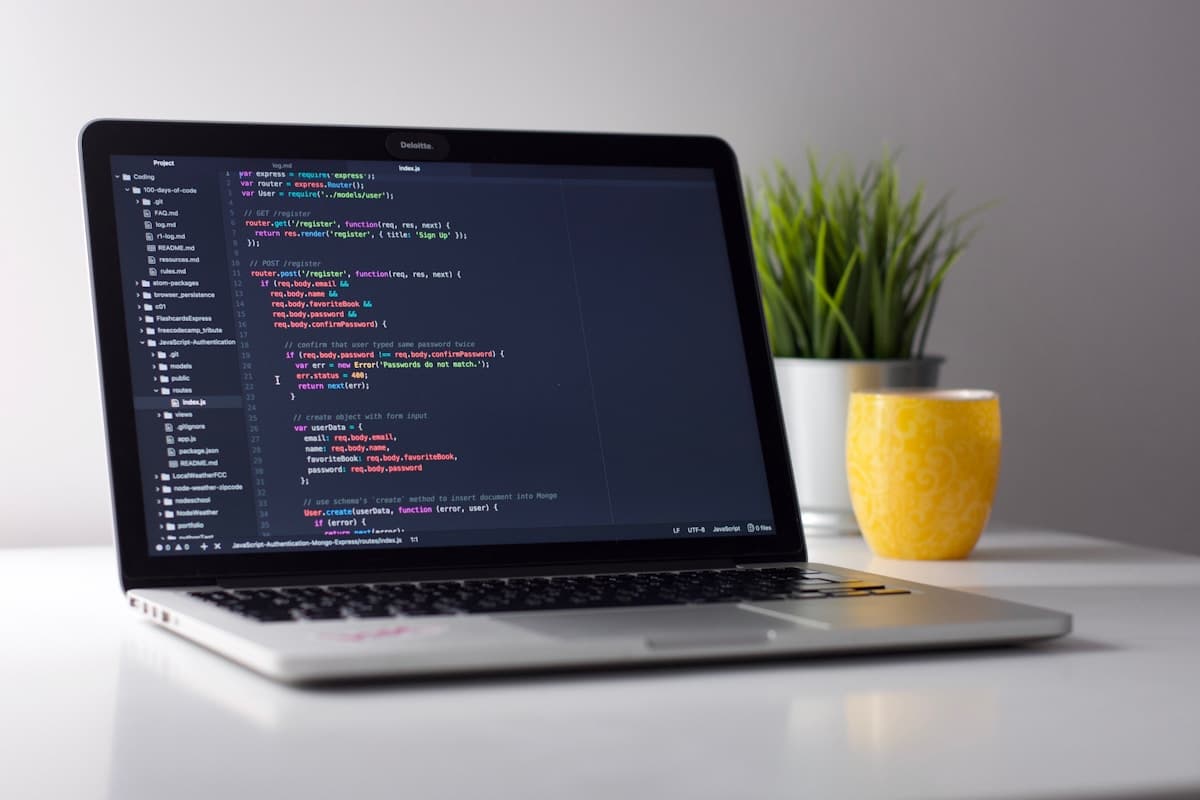
“A structured 5-step engineering framework to audit multi-tenant SaaS platforms for data leaks, token cost runaway, latency bottlenecks, and prompt injection vulnerabilities.”
When software engineering teams bolt generative AI features onto existing multi-tenant SaaS platforms, they frequently inherit hidden architectural vulnerabilities: silent multi-tenant vector leaks, runaway token API costs, brittle prompt-chaining, and unpredictable latency spikes. Standard SOC 2 audits and conventional web application penetration tests are ill-equipped to evaluate probabilistic token streams or semantic context injection.
At Advantage AI Engineering, our senior architects conduct comprehensive 2-week AI Architecture Audits for venture-backed and enterprise SaaS companies. Below are the five foundational steps required to design and execute an end-to-end audit.
Step 1: Inspect the Data Perimeter & Tenant Isolation#
The primary risk in multi-tenant SaaS is accidental cross-tenant data leakage. The audit begins by mapping data flow from client ingestion to the model context. Review how vector embeddings are stored: Are they segregated via hard namespaces or merely loose metadata tags? Validate database-level controls (such as PostgreSQL Row-Level Security on pgvector tables) and verify that cloud API integrations enforce strict zero-data-retention agreements.
Step 2: Profile Latency Metrics (TTFT and ITL)#
Standard APM dashboards measure end-to-end HTTP request duration, which masks the root cause of slow AI interactions. The audit separates Time-To-First-Token (TTFT) from Inter-Token Latency (ITL). If TTFT is high (>1,500ms), the system suffers from unoptimized prefill computation, missing prefix caching, or bloated prompt context. If ITL is erratic, the GPU serving cluster is experiencing memory-bandwidth saturation.
Step 3: Audit Token Economics & Caching Deficits#
Examine your monthly token expenditure per active tenant and feature. Are users repeatedly submitting identical queries that could be intercepted by an in-memory semantic cache? Are 80% of routine categorization tasks routed to expensive frontier models ($3+/M tokens) instead of fast-path open-weight models ($0.20/M tokens)? Identifying these bottlenecks routinely unlocks 60% to 80% in direct cost savings.
The audit also analyzes payload serialization overhead. Sending verbose JSON payloads or unpruned documentation chunks directly to model prompts wastes millions of tokens daily. We evaluate prompt compression algorithms and prefix caching strategies that streamline context windows prior to inference execution.
Step 4: Threat Model Agent Tool Privilege Boundaries#
If your platform utilizes autonomous agents via function calling or the Model Context Protocol (MCP), evaluate their blast radius. Can an adversarial prompt injected via a customer document trick an agent into executing destructive database writes or exfiltrating API secrets? Every tool execution must be guarded by strict schema validation and an external authorization sidecar enforcing the caller's verified permissions.
During the audit, we deploy synthetic adversarial jailbreaks and prompt injection probes to stress-test your system boundaries. We verify that tool execution runs inside isolated containers or WebAssembly runtimes with explicit network sandboxing, ensuring compromised agents cannot traverse internal private subnets.
Step 5: Review Evaluation Harnesses and Regression Guardrails#
A production platform must possess automated CI/CD eval suites. Inspect how changes to prompts, retrieval parameters, or model versions are tested. If the team relies on subjective manual spot-checks ('vibes-based testing'), the codebase is at extreme risk of silent quality regression.
We review golden benchmark datasets, testing methodology, and statistical scoring metrics across Context Relevance, Faithfulness, and Toxicity. Every pull request must demonstrate automated regression protection before deployment.
The Audit Deliverables#
A rigorous audit must conclude with three actionable engineering artifacts: (1) An Executive Risk Register categorizing security and financial vulnerabilities by severity; (2) Formal Architecture Decision Records (ADRs) recommending specific technology migrations; and (3) A prioritized 90-Day Engineering Remediation Roadmap.
Advantage AI Engineering provides deep-dive AI architecture and security audits for SaaS platforms. We deliver actionable findings and production-grade remediation runbooks tailored to your platform. Contact our technical team to schedule an initial scoping session with our lead software architects today.
Written by Advantage AI Engineering
Published by Advantage AI Engineering. Our R&D group conducts deep architectural evaluations on frontier reasoning models, multi-agent frameworks, and zero-egress VPC deployment patterns.
CONTINUE READING
Related Architecture Analyses
Choosing the Right AI Stack for High Throughput Enterprise Apps
An architectural deep dive into selecting inference engines, serving topologies, hardware configurations, and caching layers for enterprise applications sustaining thousands of concurrent LLM requests.
A Definitive Roadmap to Multi-Tenant RBAC in AI-Enabled SaaS
How to architect bulletproof tenant isolation, vector database access control, fine-grained agent tool authorization, and auditability in modern AI-native SaaS platforms.
Building Deterministic AI Portals for HIPAA and SOC 2 Compliant Apps
A concise technical guide to designing zero-egress, audit-ready AI portals that satisfy strict healthcare and enterprise compliance mandates without compromising user experience.